
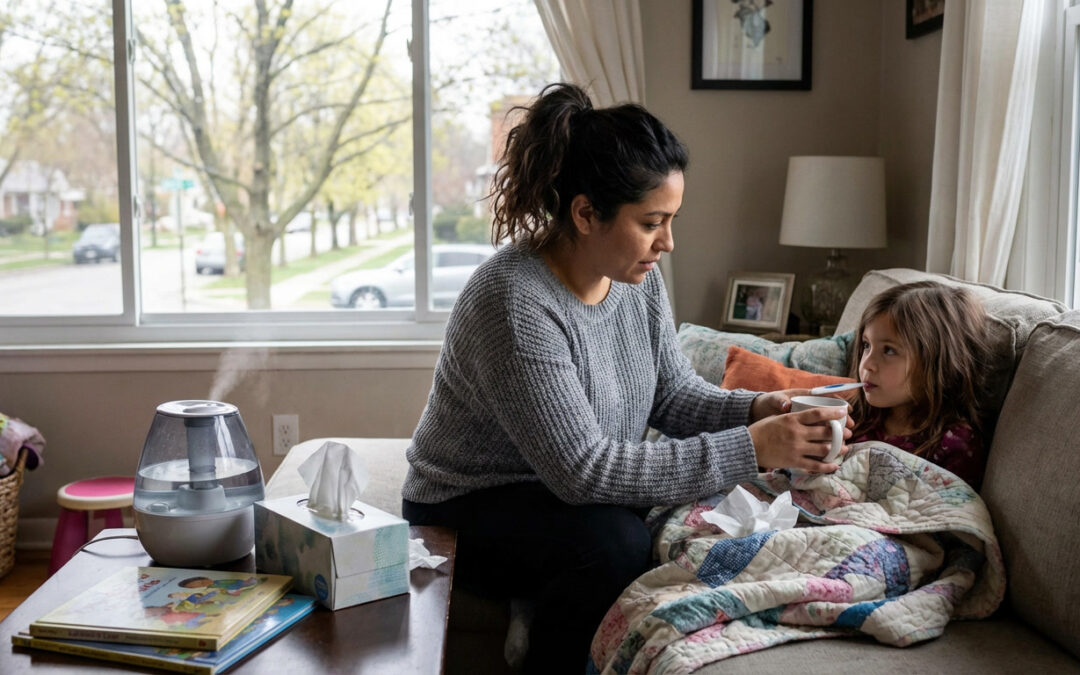
For professional caregivers, caring for sick children is often an inevitable part of the job. One minute you are enjoying a perfect day off (i.e., hot yoga, dog park, Netflix queued up—you get it) and the next your phone rings, and your nanny family needs help. Their four-year-old is home sick and missed school yesterday. You want to help, but you’re wondering if you are about to spend the week battling sniffles.
But caring for sick children does not automatically mean you are guaranteed to get sick, too. With vaccinations, smart hygiene habits, and a proactive approach to your health, your risk is much lower than you might think.
Research published in the New England Journal of Medicine found that someone living in the same household as a sick child only caught the illness about 21 percent of the time. Illness spreading to more than one other household member occurred only 6 percent of the time, and that refers to people who are home all day with the child. Your risk as a prepared nanny is even lower.
Here are five practical ways to make sure you are protected while caring for sick children.
1) Disinfect and Come Prepared
During cold and flu season, your nanny bag should include more than the usual snacks and crafts. Stock up on disinfecting wipes, extra tissues, and an alcohol-based hand sanitizer. These small tools make a big difference when caring for sick children.
If it makes you more comfortable, consider wearing a mask and using disposable gloves for tasks like cleaning up tissues or handling bodily fluids. Pediatricians do it for a reason. It adds an extra layer of protection and peace of mind.
Wipe down high-touch surfaces like doorknobs, light switches, and tablet screens. A few extra minutes of cleaning can reduce germ exposure significantly.
2) Wash Your Hands the Right Way When Caring for Sick Children
Hand washing is simple, but it has to be done correctly. Use warm water and soap, lather thoroughly, and scrub for at least 20 seconds. A good trick is to sing Happy Birthday to yourself twice while washing.
Proper hand hygiene is one of the most effective strategies when caring for sick children. Wash your hands before eating, after wiping noses, after bathroom visits, and anytime you touch shared surfaces.
3) Stay Up to Date on Vaccinations
Vaccination remains one of the strongest defenses against serious illness. Getting the annual flu shot can reduce your risk of contracting common strains of influenza.
The next time you are at CVS or Walgreens picking up essentials, stop by the pharmacy. A quick appointment can help prevent weeks of feeling miserable. Protecting yourself also protects the families you work with.
4) Invest in Your Own Health
Caring for sick children is much easier when your immune system is strong. That means prioritizing your overall well-being.
To stay healthy, eat balanced meals, stay hydrated, and aim for consistent sleep. Regular exercise, vitamin C, probiotics, and plenty of greens can support immune function. Whether you are eating salads or blending green smoothies, nourishing your body matters.
Think of your health as part of your professional toolkit. The better you feel, the better care you can provide.
5) Use Common Sense
You know this—germs are everywhere. If you have ever flown on an airplane, visited an amusement park, taken public transportation, or held onto an escalator handrail, you have encountered plenty of bacteria.
When caring for sick children, follow the same rules you teach them. Do not share food or drinks. Avoid touching your face after handling tissues. You know the drill.
Encourage the child to rest in one designated area, such as the couch or their bed. Creating a temporary resting space limits the spread of germs throughout the home and keeps you in a safer zone.
6) Confidence When the Phone Rings
Caring for sick children may not be glamorous, but it is often a necessary part of the job. In the same way families rely on you when everything is as per usual, they also rely on you when their little ones are under the weather, especially when it coincides with your regular schedule. With preparation and healthy habits, you can confidently step in without feeling helpless.
The next time you get that call to rescue a family in need of childcare, you may feel more empowered to say yes. A little prevention goes a long way.
So long, sniffles.

Recent Comments