
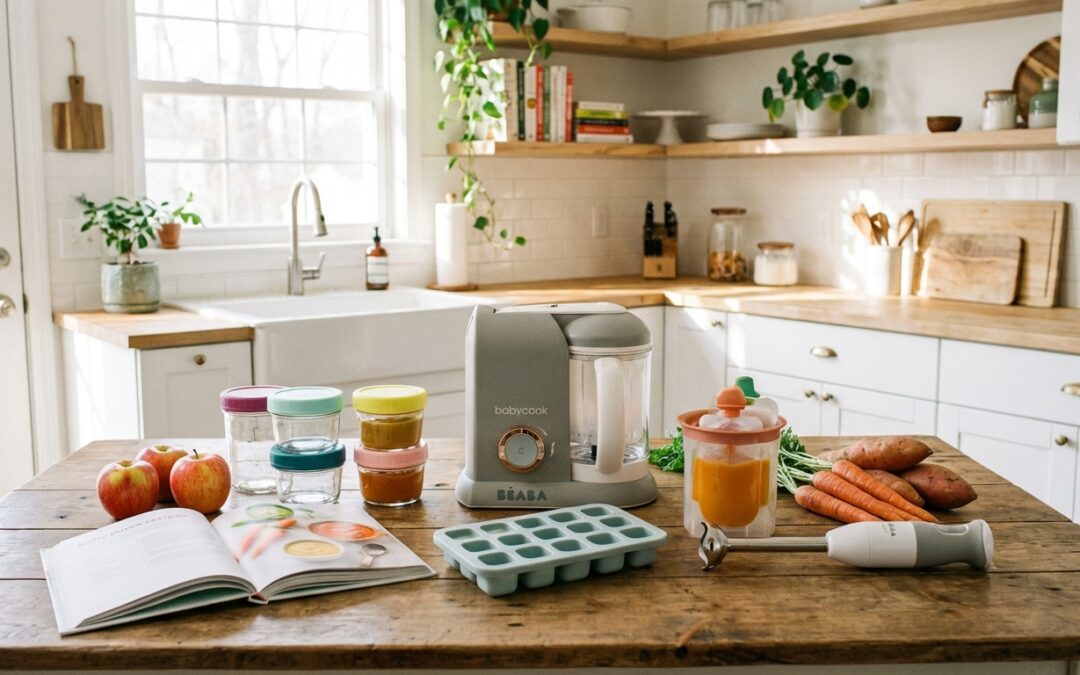
Making homemade baby food is one of the most rewarding stages of infant care. When babies are ready to explore solids, it opens the door to new textures, flavors, and developmental milestones. Watching a little one taste banana, yogurt, or sweet potato for the first time is an unforgettable moment. But it can also come with a new responsibility: making baby food.
Preparing homemade baby food can feel overwhelming if you are unsure where to start. Let’s walk you through everything you need to master the basics confidently.
1) When Are Babies Ready for Solids?
Most babies begin solids around six months of age. However, the timing should always be guided by the baby’s pediatrician and the parents. Signs of readiness typically include:
- Holding their head up independently
- Sitting with support
- Grasping and bringing toys to their mouth
- Showing interest in food
As a nanny, communication with parents is key. Before introducing homemade baby food, confirm that everyone is aligned on timing and approach. Notice these signs that they may be ready? Have a conversation with your nanny family.
2) To Puree or Not to Puree?
There are more options than ever when it comes to feeding babies. Traditional purees are still popular, but baby-led weaning has also gained traction.
Baby-led weaning involves offering soft, appropriately sized finger foods such as small pieces of sweet potato, banana, avocado, soft meats, or egg. This method encourages fine motor development and chewing skills while introducing babies to a wide variety of foods.
That said, purees remain an excellent option. Many caregivers use a combination of both methods, especially in the early stages. Homemade baby food purees allow you to control texture and ingredients while watching closely for potential food allergies. They are also easy to store and transport in convenient containers or pouches.
There is no single right approach. The best plan is the one that fits the baby’s development and the family’s preferences.
3) What You Need to Make Homemade Baby Food
Preparing homemade baby food usually involves steaming, boiling, or roasting fruits, vegetables, and proteins before blending or mashing them. Fortunately, there are many tools that make the process simple.
a) All-in-one baby food makers
Devices such as the Beaba Babycook 4-in-1 can steam, blend, defrost, and reheat with the touch of a button. These machines are helpful for making larger batches of homemade baby food efficiently.
b) Blenders and storage systems
A compact blender like the Baby Bullet makes it easy to puree small portions. Reliable storage containers are essential for organizing batches and keeping food fresh.
c) DIY baby food pouch makers
The Infantino Squeeze Station allows you to create reusable pouches filled with homemade baby food. This is especially helpful for busy families who want the convenience of store-bought pouches without the added waste.
d) Manual options
If you prefer something simpler, a Mash and Serve bowl or a baby food mill can mash softened fruits and vegetables into a chunky texture without electricity. You could also try a baby food mill, which is a simple kitchen instrument that grinds fruit and vegetables into a chunky mash.
4) Choosing the Right Foods
In the early stages, focus on nutrient-rich options such as fruits, vegetables, lean meats, and whole grains. Homemade baby food gives you full control over ingredients, which means you can avoid unnecessary additives and added sugars.
For inspiration, baby-specific cookbooks such as The Big Book of Organic Baby Food offer helpful recipes and guidance. Social media accounts like Yummy Toddler Food and Baby Food Universe also provide creative ideas and age-appropriate flavor combinations for babies and toddlers.
Introducing a variety of flavors early can help encourage adventurous eating later on.
5) Safety First
Safety is critical when preparing homemade baby food. Introduce new foods slowly and one at a time. This makes it easier to identify the cause of any allergic reaction.
If offering whole foods, cut them into small, easily graspable pieces that are no larger than half an inch in any direction. Food should be soft and easily squishable between your fingers. Avoid choking hazards such as nuts, popcorn, whole grapes, raw carrots, and stringy foods like celery.
Proper storage is equally important. Homemade baby food can be stored:
- In the refrigerator for up to 24 hours if it contains meat or eggs
- In the refrigerator for up to 48 hours if it contains only fruits or vegetables
- In the freezer for up to one month
Never leave baby food at room temperature for more than two hours. Always defrost frozen food in the refrigerator or by using the defrost setting on a baby food maker. Avoid thawing on the counter or in standing water.
For more about food safety, check out these guidelines.
6) Final Thoughts
Making homemade baby food is not about perfection. It is about providing nutritious options while supporting development and curiosity. With the right tools, thoughtful preparation, and close attention to safety, you can confidently guide a baby through this exciting stage.
As a nanny, your care and intention make all the difference. Homemade baby food is simply another way to nurture healthy habits and joyful first experiences at the table.

Recent Comments